There’s a reason the yellow “W” still means something three decades later.
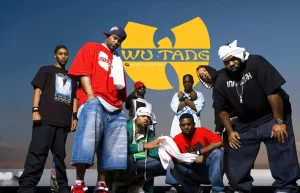
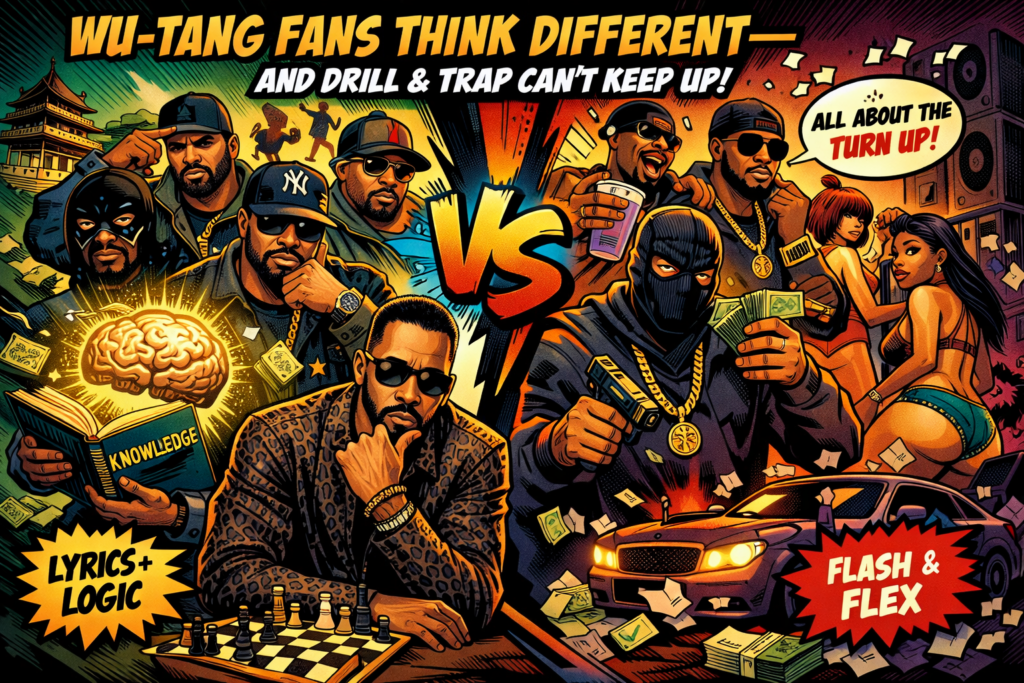
When you press play on the Wu-Tang Clan, you’re not just listening to rap music – you’re entering a curriculum. Philosophy. Street economics. Chess strategy. Supreme Mathematics. Five-Percent Nation lessons. Kung-fu cinema. Slang that doubles as coded language. It’s layered. It’s dense. It demands attention.
This isn’t about disrespecting drill or trap. It’s about recognizing that different music exercises different parts of the brain. And when it comes to lyrical complexity, conceptual depth, and cultural education, Wu-Tang built a syllabus.
Let’s break it down.
1. WU-TANG REWARDS DEEP LISTENING
When you listen to Enter the Wu-Tang (36 Chambers), you’re decoding metaphors. When GZA delivers a verse on Liquid Swords, he’s weaving chess strategy into street survival. When RZA constructs a beat, he’s sampling obscure soul, kung-fu dialogue, and dusty drum breaks in unconventional patterns.
Wu-Tang lyrics are layered with:
- Historical references
- Religious symbolism
- Street economics
- Martial arts philosophy
- Advanced rhyme structures
- Abstract slang
You don’t just “catch a vibe.”
You study it.