BBLs vs. Real Ass: The Industry’s Fake Curve Obsession and Why Hip Hop Is Finally Calling It Out
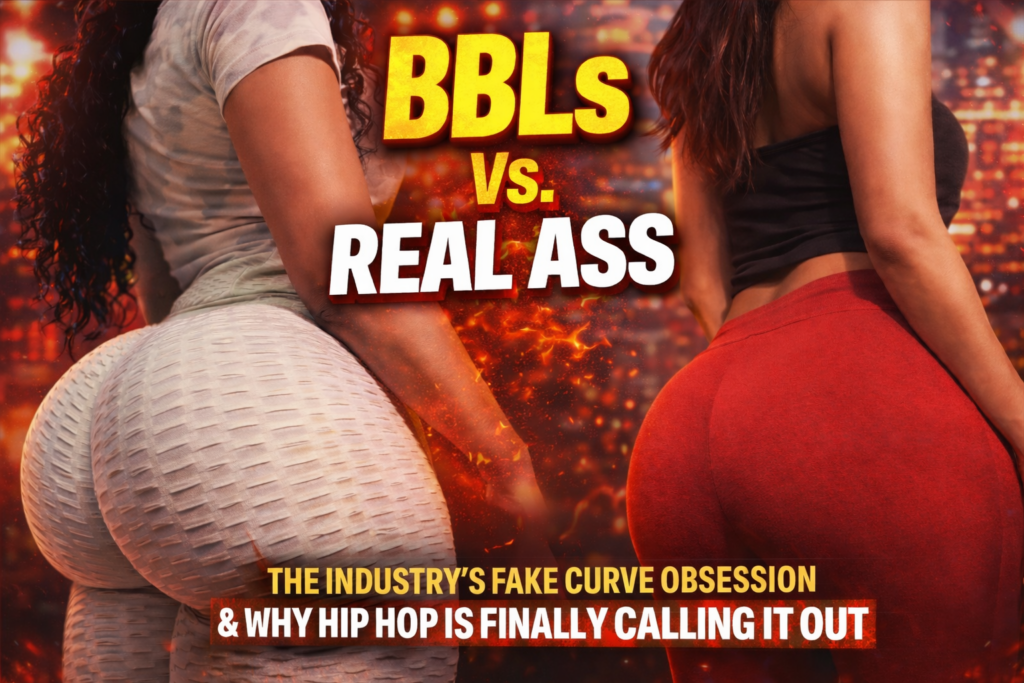
For years, hip hop has shaped culture – from slang to sneakers to silhouettes. But somewhere between the rise of Instagram filters and influencer clout-chasing, the culture’s love affair with “natural” started getting… manufactured. Welcome to the era of BBLs vs. Real Ass and the debate is louder than ever. The New Industry Standard: Built, Bought, and Boosted Scroll your timeline. Red carpet. Music video. Club section. It’s the same hourglass blueprint over and over again. The Brazilian Butt Lift (BBL) became the unofficial uniform of the 2010s, fueled by reality TV, viral Instagram models, and rappers shouting out “snatched waist, fat ass” in every other hook. Suddenly, curves weren’t just appreciated — they were engineered. And let’s be honest: the algorithm loved it. But Here’s the Plot Twist… Fans are starting to notice something: everything looks the same. The exaggerated hips. The gravity-defying proportions. The copy-and-paste silhouettes in music videos. The comments section is shifting from “body goals” to “this don’t even look real.” And that’s the point. Hip hop has always valued authenticity. From boom bap purists calling out ghostwriters to underground heads rejecting industry plants — real has always mattered. Now that same energy is being applied to body culture. Real Ass Energy > Surgery Trends There’s a new wave of appreciation happening confidence without the clinic. — not just for “natural bodies,” but for Artists and fans alike are speaking on: Unrealistic beauty standards pushed by labels
WHY TODAY’S RAPPERS SUCK (AND WHY HIP HOP FANS ARE FED UP)
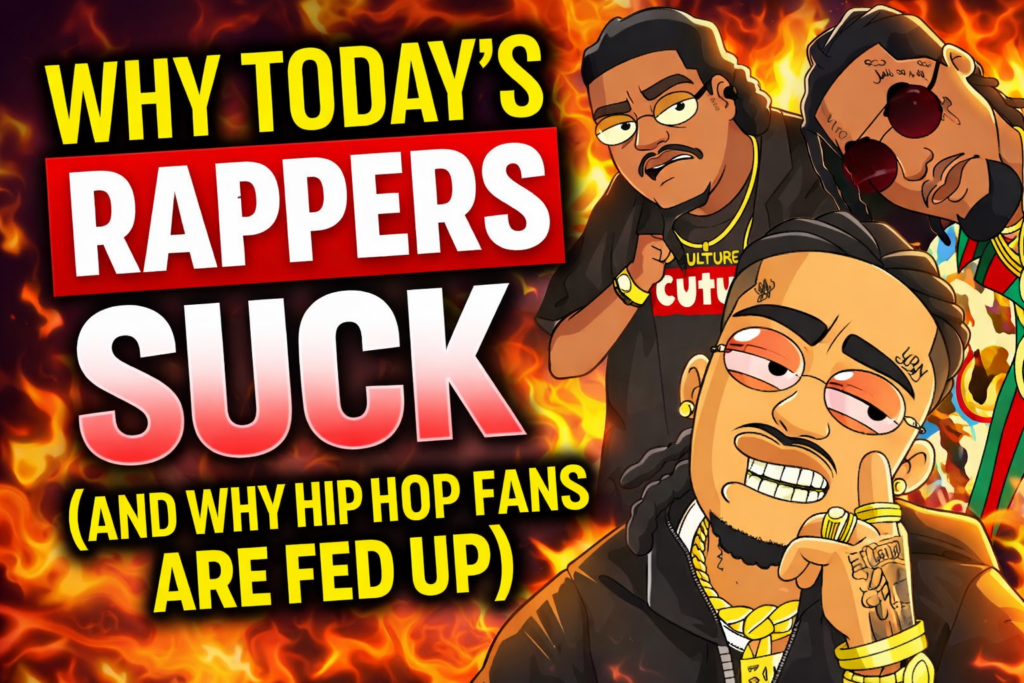
Auto-tune addiction. Microwave careers. TikTok bars. Did the culture lose its backbone? Or are we just getting old? Let’s get straight to it. A lot of today’s rappers suck. Not all. But enough that hip hop heads feel like they’re watching the culture they love turn into a fast-food franchise — quick, cheap, and designed for algorithms instead of impact. So what happened? 1. Microwave Music > Timeless Albums There was a time when albums meant something. When Nas dropped Illmatic, it shifted the temperature of New York. When Jay-Z released The Blueprint, it felt like a masterclass. When Wu-Tang Clan stepped in, it was cinematic chaos with strategy behind it. Today? Artists drop 27-track “albums” that feel like playlists. No sequencing. No concept. No cohesion. Just vibes and filler. Streaming rewards volume. The culture used to reward impact. 2. Bars Don’t Matter Like They Used To Hip hop was built on skill. Rakim rewrote rhyme structure. KRS-One made you think. Big L made punchlines surgical. Now? A hook goes viral on TikTok and suddenly someone’s “next up.” Verses feel like afterthoughts. Cadence > content. Melody > meaning. It’s not that melodic rap is bad — it’s that lyrical standards dropped. You can hum a hit all day… but can you quote a bar five years later? 3. Image Over Identity Hip hop used to reflect neighborhoods, struggle, hustle, and perspective. Whether it was Queensbridge, Compton, or the Bronx — you felt geography in the music. Now? It’s brand-first, personality-second. Industry plants. Artificial beef. Viral moments manufactured for engagement. The grind turned into a rollout strategy. 4. Nobody Develops An Artist Anymore Remember artist development? You could hear growth from album to album. Flows evolved. Production matured. Themes deepened. Now careers are built on one viral single. If the next one doesn’t hit? Onto the next face. The system rewards quick flips, not long-term legends. 5. But Here’s The Twist… Not all of today’s rappers suck. The problem isn’t talent. It’s attention. There are monsters out right now — underground, independent, surgical with the pen — but they don’t always get pushed to the front of the algorithm. The mainstream isn’t the whole culture. Hip hop didn’t die. It just got buried under noise. The Real Question Do today’s rappers suck? Or did the business model change what gets promoted? Because if lyricism, hunger, and authenticity are still out there — and they are — maybe the issue isn’t the artists. Maybe it’s what we reward. Drop the names. Who’s carrying the culture? Who’s watering it down? Let’s argue.